Most advice about getting things done boils down to two rival systems, and almost nobody compares them honestly. One is the Pomodoro Technique. The other is time blocking. Both work. Neither is universally better. The right pick depends on the shape of your day, not your willpower.
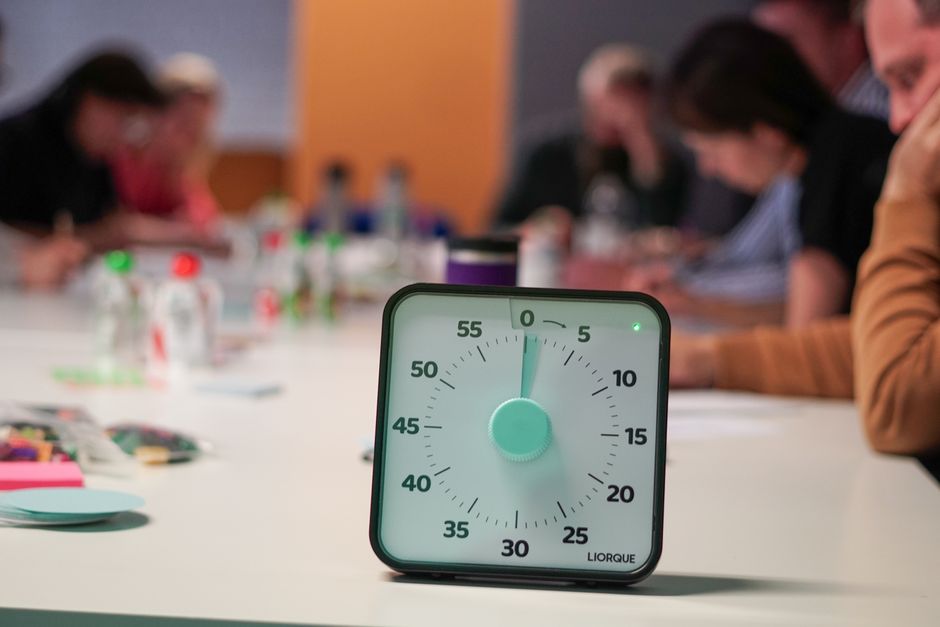
The Pomodoro Technique was developed by Francesco Cirillo in the late 1980s, who famously used a kitchen timer shaped like a tomato (hence “pomodoro”) to structure his study sessions. The method is simple: work for 25 minutes, take a 5-minute break, and after four cycles, take a longer break of 15 to 30 minutes. Its appeal is that it turns a vague, intimidating task into a series of short, winnable sprints. If you’ve ever avoided starting something because it felt endless, telling yourself “just 25 minutes” lowers the barrier enough to actually begin. It also builds in recovery time, which matters more than people assume — research from psychologist Gloria Mark at UC Irvine has found that once attention is interrupted, it can take over 20 minutes to fully return to the original task, so the Pomodoro’s scheduled breaks are at least a deliberate interruption rather than an accidental one.
Time blocking works differently. Instead of chopping work into fixed intervals, you assign specific tasks to specific chunks of your actual calendar — “9:00–10:30, write proposal,” “1:00–2:00, emails,” and so on — treating your to-do list items like appointments with yourself. This is the approach popularized by writer and computer science professor Cal Newport, who argues that unscheduled time defaults to shallow, reactive work. Time blocking forces you to estimate how long things really take, which is uncomfortable at first but sharpens your planning over months. It also plays well with a calendar full of meetings, since you’re not trying to protect artificial 25-minute windows around other people’s obligations.
The honest tradeoff: Pomodoro is better when a task is unpleasant, open-ended, or prone to procrastination — writing, studying, decluttering, anything where starting is the hard part. The frequent breaks also make it a poor fit for work that requires deep, uninterrupted immersion, like debugging complex code or drafting a long argument, because just as you hit a groove, the timer tells you to stop. Time blocking is better for days with real structure and for tasks that need sustained concentration, but it falls apart if your schedule is unpredictable or if you chronically underestimate how long things take, since one overrun task can wreck the rest of the day’s blocks.
A practical way to decide: if your main problem is avoidance — you know what to do but can’t make yourself start — try Pomodoro first. If your main problem is fragmentation — you’re busy all day but nothing substantial gets finished — try time blocking. Some people use both: time-blocking the calendar for the shape of the day, then running Pomodoro cycles inside a block reserved for a task they’re dreading. You don’t need to pick a permanent identity as a “Pomodoro person” or a “time blocker.” Match the method to the task in front of you, and switch when it stops working. That flexibility, more than any single technique, is what actually keeps people productive over the long run.