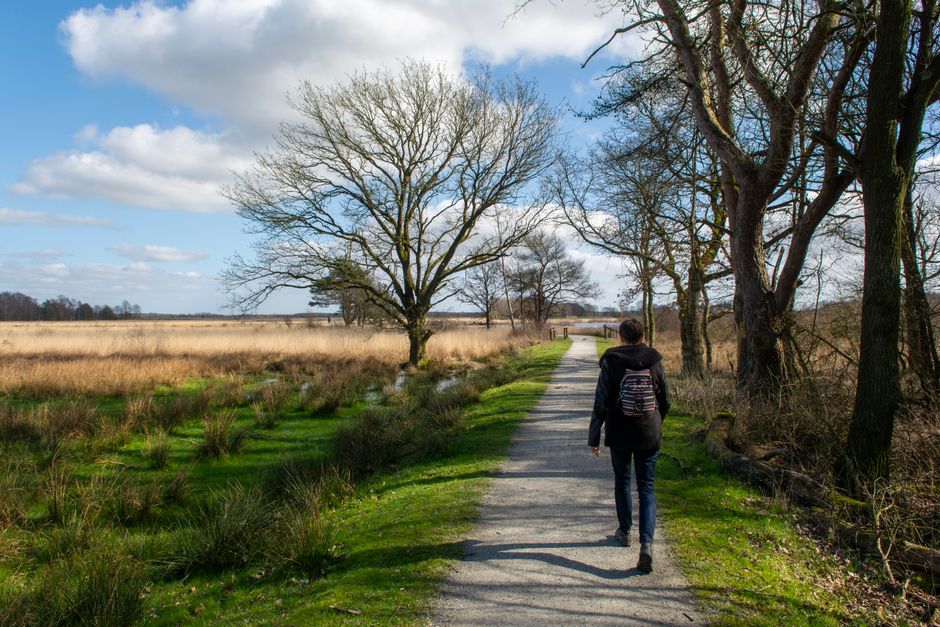
Everyone tells you walking is good for you, and then leaves you to figure out the rest on your own. Here’s what actually helps once you’re standing at your front door wondering if fifteen minutes around the block is even worth it.
You don’t need 10,000 steps, and nobody quite knows where that number came from. It traces back to a 1960s Japanese pedometer marketed as “manpo-kei,” or “10,000-step meter,” not to any health guideline. The number that actually has research behind it is smaller and more forgiving: a study of nearly 17,000 older women published in JAMA Internal Medicine found that
those who took around 4,400 steps per day had a 41% lower risk of death during the study than those who took 2,700 steps
. Benefits kept climbing with more steps but the curve flattened out well below five figures. Point being: if 10,000 feels impossible, you’re not failing at anything real. Aim for more than you’re doing now.
Your first week will feel harder than your fifth, and that’s not a sign you’re unfit — it’s your body and your schedule renegotiating with each other. Don’t judge the habit by day three.
Nobody mentions that shoes matter more than motivation. A walk that leaves your feet aching will get cancelled tomorrow. You don’t need anything expensive, just something with actual cushioning that you’ve worn before, not new-out-of-the-box.
Weather will end the habit if you let it be the deciding factor every time. Decide in advance what your rain plan is — a mall loop, a covered garage, stairs in your building — so a bad forecast doesn’t become a bad excuse.
The time of day you choose will quietly determine whether this sticks. Walks bolted onto an existing routine (after coffee, after dropping the kids off, right when you get home from work) survive much longer than walks that require you to conjure motivation from nothing in an empty part of the day.
Tracking steps can backfire before it helps. If checking a number after every walk makes you anxious or competitive with yourself, skip it for the first couple of weeks and just notice how you feel instead. The data can come later, once the habit exists independent of it.
Walking with someone changes the psychology of it, and not always in the way you’d expect — a walk with a friend often gets easier to keep on the calendar than a solo one, because now someone else is counting on you showing up.
Lastly, nobody warns you that the payoff isn’t dramatic. There’s no single walk that will change how you feel. What the research on step counts actually shows is a gradual, cumulative dose-response relationship, not a threshold you cross once and feel transformed. You’re not looking for a big moment. You’re looking for a Tuesday, six weeks from now, where walking twenty minutes just feels normal — because that’s what actually shows up in the outcomes that matter.


